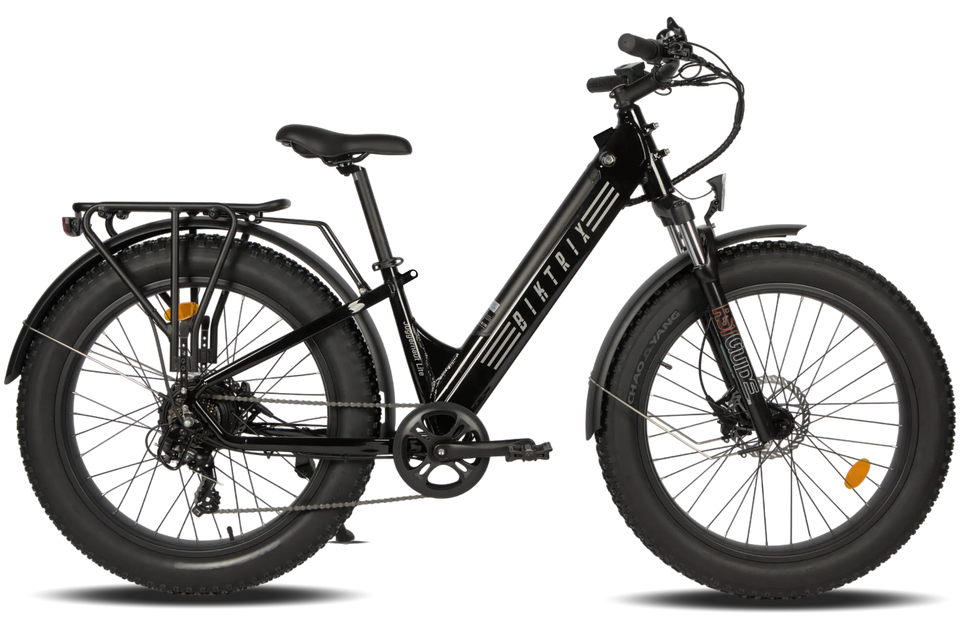
Biktrix
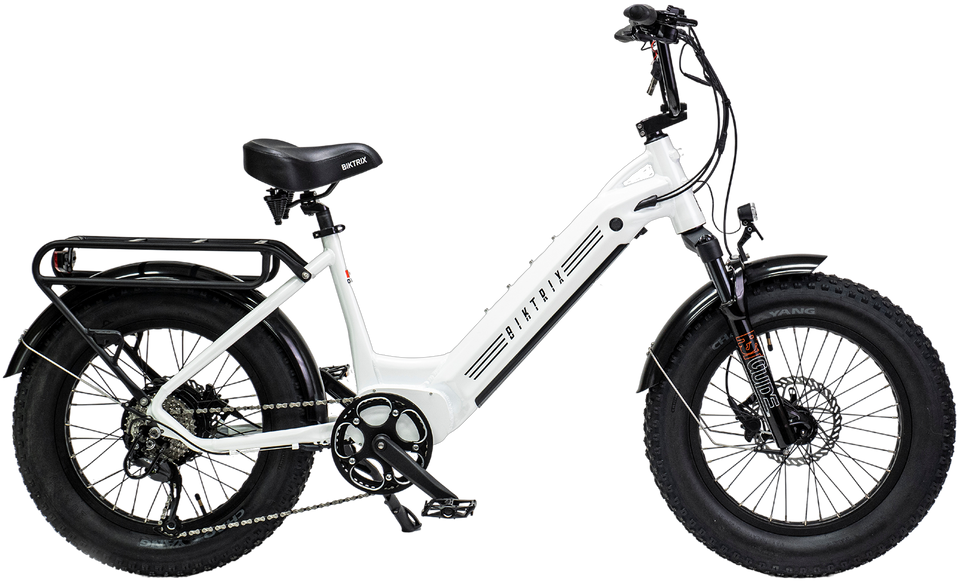
Juggernaut Lite
The Juggernaut Lite Step-Thru is a robust and reliable electric bike that is ready for any adventure.
Continue reading
With a powerful 750W motor, 6-speed Shimano drivetrain, and dual-piston hydraulic brakes, this bike provides simplicity, power, and reliability with minimal maintenance.
Retailer's own copy, quoted as published.
Source: biktrix.com · confidence: low · brand page
Specifications — as published
- Motor
- 750 W hub
- Battery
- 624 Wh · 48 V
- Max payload
- 120 kg
Only fields published by the brand are shown — nothing is estimated.
Where it stands legally · Canada
Power or cutoff isn't published for this model, so we can't call its class. Provincial rules.
Offers — Canadian (CAD)
- Biktrix
$3,399−6% $3,199 CAD Offer
Prices are read nightly from retailer storefronts; markdowns are the retailer's own list-vs-current price. This is the Canadian edition — see the US price.
Performance Overview
Strengths
Nothing stands out above the fat tire average.
Weaknesses
- Battery capacity32%
624 Wh vs 912.9 Wh avg
- Max payload23%
120 kg vs 156.6 kg avg
- Motor power15%
750 W vs 886 W avg
Percentiles and averages are computed at build time from published specs of fat tire models in the index — no spec is estimated. Categories with sparse data show fewer axes.
The verdict — computed, not opined
$200 CAD below its own list price right now.
- Value Score 49/100 — ranked 25 of 26 CAD-priced fat tire models
- Price rank 35 of 43 fat tire models priced in CAD
- −$200 CAD (−6%) vs its compare-at price at Biktrix
- Also sold in the United States edition — see the US price.
Every line above is derived from catalog data at build time — how scoring works.