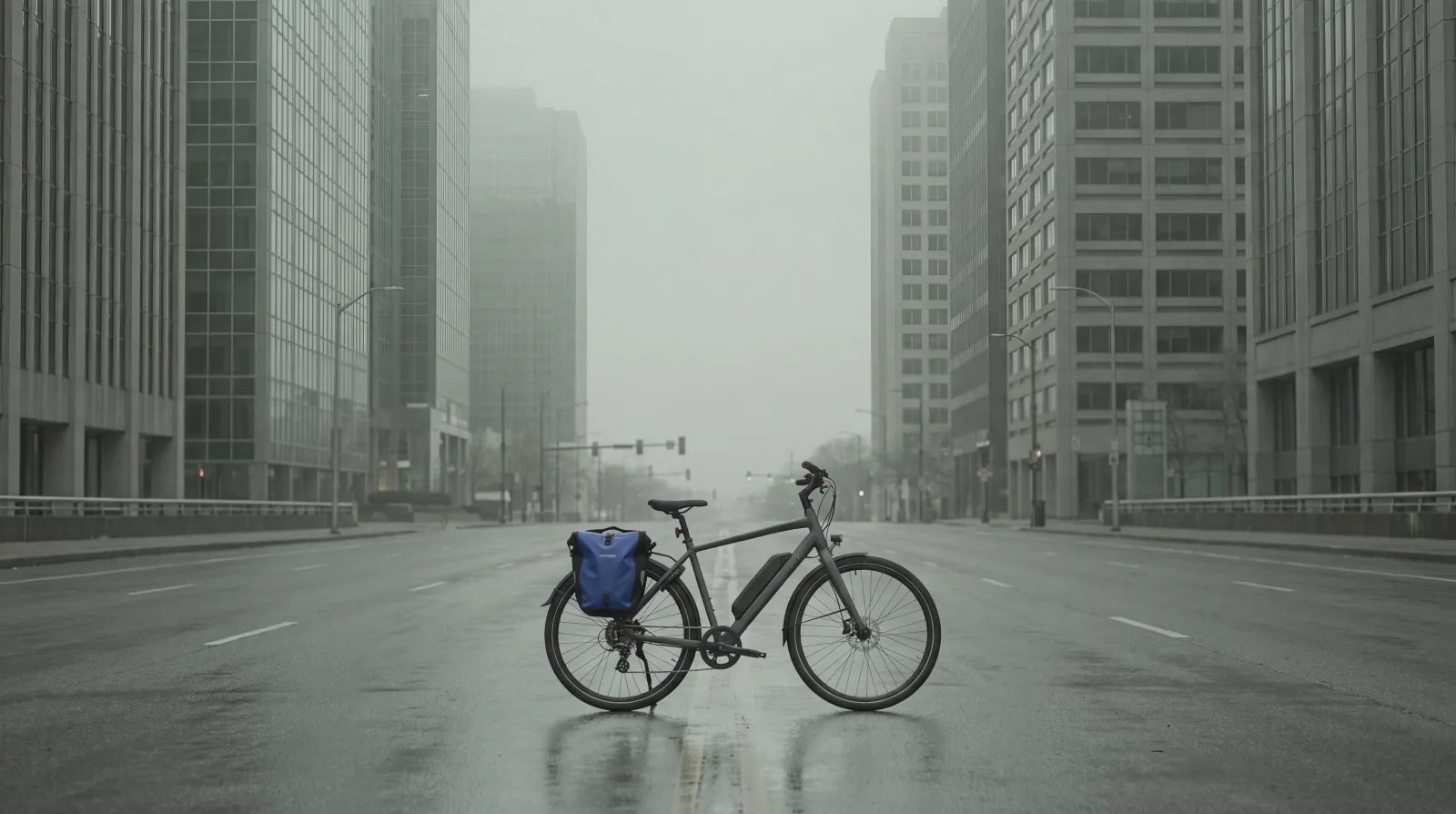
Types
Commuter Electric Bike: Price, Power, and the Data (2026)
A commuter electric bike is the biggest category we track: 139 CAD-priced models at a 2,799 median. Here is what defines one and what it costs.
The Data Desk Jul 11, 2026 7 min read
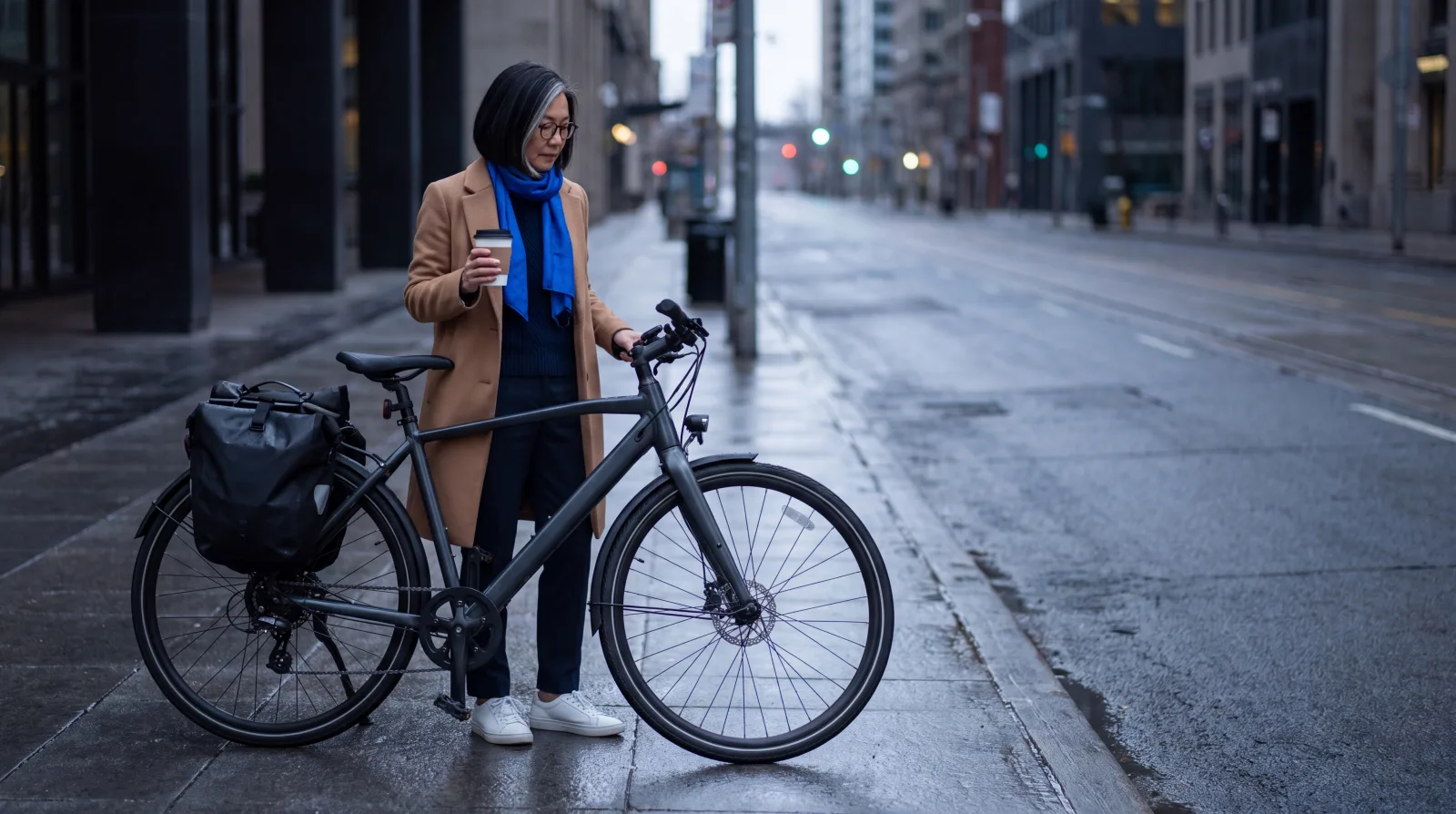
Quick answer
The commuter is the deepest category we track: 139 CAD-priced models, at a $2,799 median. That sits just above the whole-market median of $2,373 CAD (n=343). A commuter electric bike is defined by fit, not top speed. Expect upright geometry, fenders, rack and light mounts, and a battery sized for a daily round trip. Most run a 750 W-class hub motor and a mid-size pack. The field spans budget imports to mid-drive dealer bikes, so treat $2,799 as your planning anchor, not a ceiling. Time the purchase: 44% of the 714 live offers are genuine markdowns, at a median 20% cut.
What defines a commuter electric bike
A commuter is a category of use, not a single spec sheet. The job is a repeatable daily trip in normal clothes.
That job shapes the parts. Commuters favour upright, stable geometry over a racing crouch. They carry fenders, rack mounts, and integrated lights so the bike works in rain and after dark. Batteries are sized for a round-trip commute, not a weekend tour.
Most commuters use a hub motor for quiet, low-maintenance assist. Pricier ones move to a mid-drive for hills and torque. The category overlaps others: a folding bike can commute, and a cargo bike can too. What sets the commuter apart is the balance. It trades top speed and off-road grip for comfort, weather protection, and range you can rely on.
For how the categories divide up, see types of electric bikes.
Where the commuter sits on price
Commuters anchor the middle of the market. Their $2,799 CAD median (n=139) sits close to the whole-market median of $2,373. Cheaper types are usually stripped-down imports; pricier types add cargo capacity or full-suspension frames.
| Type | Median (CAD) | Models (n) |
|---|---|---|
| Cargo | $6,399 | 15 |
| Mountain | $5,199 | 29 |
| Trike | $3,599 | 5 |
| Road | $3,449 | 10 |
| Commuter | $2,799 | 139 |
| Folding | $1,800 | 11 |
| Scooter | $1,499 | 26 |
| Dirt / off-road | $999 | 92 |
| Fat-tire | $625 | 16 |
One median hides a wide field. Across the whole index, the middle half of Canadian prices runs from $925 to $4,049. Commuters span that band too. Below $2,799 you trade sensor quality, dealer service, and warranty length. Above it you buy mid-drive motors and stronger support networks.
Compare the full field in the database, or sort the commuter rankings on the boards. The USD median for the whole market is $1,599 (n=324). We never mix the two currencies in one column.
Power: most commuters are 750-watt-class
Motor rating drives much of the price above the budget tier. Of the 407 models that publish a rating, the median is 750 W.
| Motor rating | Share of models publishing a rating (n=407) |
|---|---|
| Over 500 W | 56% |
| Over 750 W | 40% |
| Over 1000 W | 26% |
For a daily commute, 750 W is plenty on flat and rolling ground. More watts help with steep hills, heavy loads, or a headwind. They also push a bike toward a higher legal class, which changes where you can ride it.
Printed ratings do not always hold up under load. We checked which numbers survive in The 750-Watt Question.
Range: read the claim, then cut it
Range is where marketing outruns physics. Of the 296 models that publish a range claim, the median claim is 126 km. That runs about 198% above what the battery math predicts.
Median battery capacity is 749 Wh. A useful rule of thumb: watt-hours divided by 20 gives realistic assisted kilometres; divided by 15 gives the gentlest best case. So a 749 Wh pack is closer to 37 to 50 real km than the printed 126.
For a commute, that math matters more than the headline. Size the battery to twice your daily round trip, so you charge every other day. We explain why claims run high in The Range Lie.
Classes and the law
Speed decides a bike’s legal class, and class decides where you can ride. The three-class model runs Class 1 and Class 2 to 20 mph, and Class 3 to 28 mph.
Canada’s federal reference is 500 W and 32 km/h. The US low-speed e-bike limit is 750 W and 20 mph on throttle. A commuter that clears those numbers may be barred from paths or need registration.
Rules vary by province and state, and they change. Check your region in the rulebook before you buy. For the tiers themselves, read ebike classes explained.
Buying a commuter on sale
Price is not fixed. Of the 714 live offers in the index, 44% are genuine markdowns: priced below the retailer’s own earlier price. The median cut is 20%.
A 20% cut is not cosmetic. On a $2,799 commuter it saves roughly $560. That can drop the bike toward folding-bike money. The median live offer across the market sits at $2,099 CAD, or $1,424 USD, below the median list price because active sales pull it down.
Watch live cuts on the market page. We break down which discounts are real, and which are theatre, in The Great Markdown.
FAQ
What is a commuter electric bike?
A commuter electric bike is built for a repeatable daily trip in normal clothes. It favours upright geometry, fenders, rack mounts, and integrated lights over top speed or off-road grip. In our index it is the largest category at 139 CAD-priced models, with a $2,799 median. Most use a 750 W-class hub motor and a battery sized for a round-trip commute.
How much does a commuter e-bike cost?
The median commuter carries a $2,799 CAD lowest live offer (n=139). That sits just above the whole-market median of $2,373. Across the index the middle half of Canadian prices runs $925 to $4,049, and commuters span that band. Below the median you trade sensor quality and support; above it you buy mid-drive motors and dealer networks.
How much range does a commuter need?
Size the battery to about twice your daily round trip, so you charge every other night. Median commuter-class battery capacity is 749 Wh. Divide watt-hours by 20 for realistic assisted kilometres, so 749 Wh is roughly 37 to 50 real km. Published range claims run about 198% above that math, so treat them as best-case, not planning numbers.
Do I need a Class 3 commuter?
Only if your route is long or hilly and local law allows it. Class 1 and Class 2 assist to 20 mph, which is enough for most city commutes. Class 3 reaches 28 mph but is barred from some paths and may need registration. Check limits in the rulebook before you pay for the extra speed.
Where can I compare commuter models?
Sort the commuter rankings on the boards, or filter the full catalog in the database. For live prices and current markdowns, use the market page. Start with the buying guide if you are new, then narrow by budget and battery size once you know your daily distance.
The bottom line
If you want one number, budget around $2,799 CAD for a well-specified commuter. That is the median of the deepest category we track, and it sits close to the whole-market median. Pick fit first: upright geometry, fenders, mounts, and a battery sized to twice your round trip. A 750 W-class motor covers most city routes; pay for a mid-drive only if your commute is steep. Treat every range claim as optimistic and divide watt-hours by 20. Check your local class limits in the rulebook, then time the buy, because 44% of offers are already discounted at a median 20%. Start with the electric bike buying guide, then compare live prices in the database.