Classes & Power
Ebike battery range explained: real km vs the claim
Ebike battery range claims run high: 296 models publish a median 126 km, yet battery math points lower. Learn the watt-hours rule and what to trust.
The Data Desk Jul 11, 2026 6 min read
Quick answer
Ebike battery range is the distance one charge covers under assist. Of the 669 models we track, 296 publish a range claim. The median claim is 126 km. That figure sits about 198% above the realistic midline from battery math. The median pack holds 749 Wh. Divide watt-hours by 20 for a realistic assisted estimate, by 15 for a gentle best case. So a 749 Wh pack points to roughly 37 to 50 real km, not 126. Treat every published range as a lab ceiling. Then check the watt-hours yourself.
What “range” means on a spec sheet
Range is how far a full charge takes you before the motor stops helping.
The number on the box is a ceiling, not an average. Brands measure it at low assist, on flat ground, with a light rider and no wind.
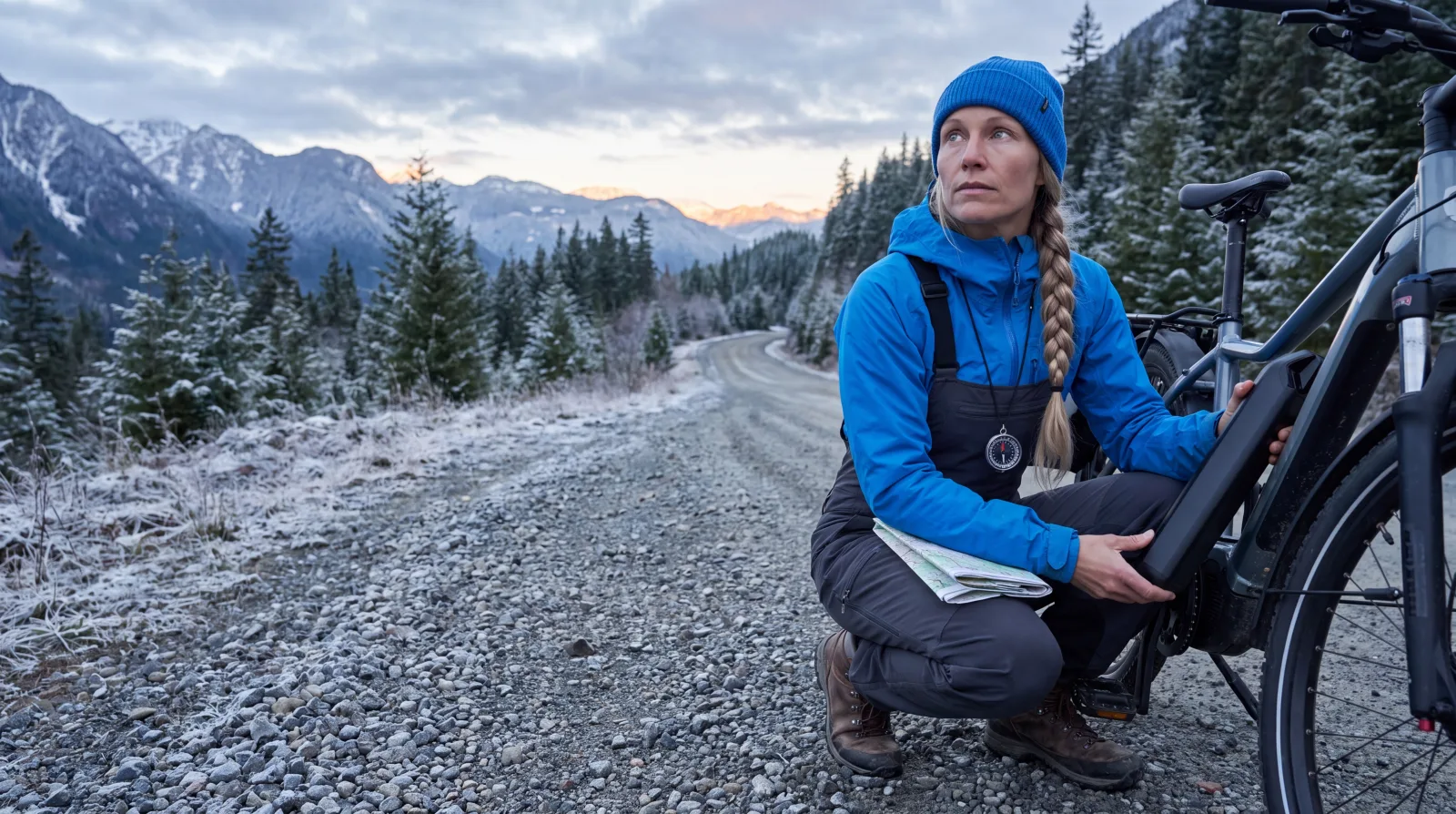
Your commute has hills, stops, cold air, and a backpack. Each one pulls the real figure down.
We dug into this gap in The range lie. The short version: published km and lived km rarely match.
How far do published claims actually go?
Only 296 of the 669 catalog models publish a range claim at all. The rest stay silent, which is its own signal.
Among those 296, the median claim is 126 km. Battery math tells a quieter story.
| Measure (of the 296 models with a range claim) | Distance (km) |
|---|---|
| Median published claim | 126 |
| Realistic midline (Wh ÷ 20) | ~37 |
| Gentle best case (Wh ÷ 15) | ~50 |
The median claim runs roughly 198% above that realistic midline. A brand can print 126 km honestly and still leave you near 37 on a real ride.
The watt-hours rule
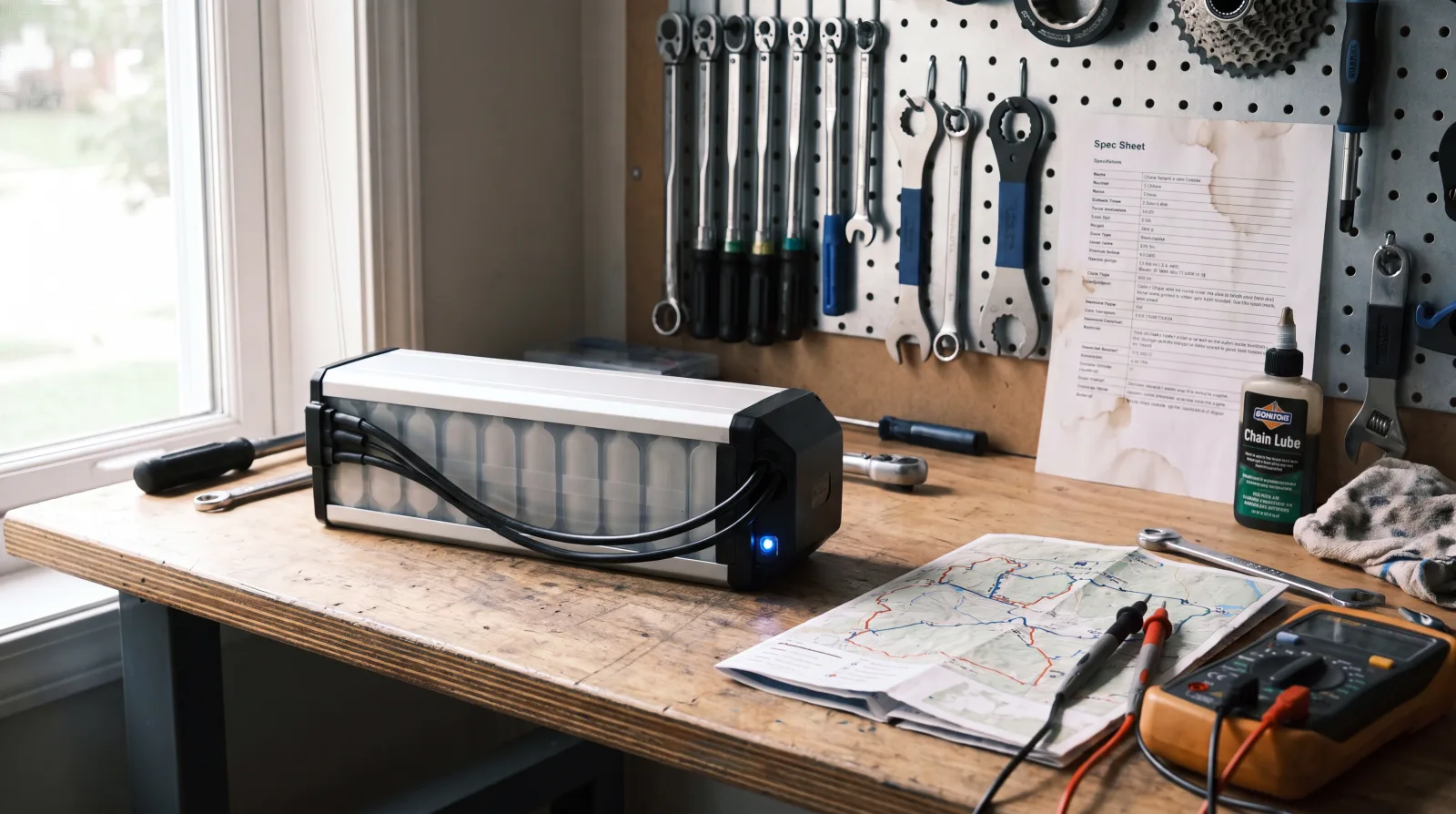
Range marketing is noisy. Watt-hours are not. A battery’s watt-hour figure is the size of your fuel tank.
Find it on the spec sheet, or multiply volts by amp-hours. Then apply one division.
| Battery math | Formula | Result for the 749 Wh median (km) |
|---|---|---|
| Realistic assisted | Wh ÷ 20 | ~37 |
| Gentle best case | Wh ÷ 15 | ~50 |
The median pack across the catalog holds 749 Wh. Divide by 20 for a realistic assisted estimate. Divide by 15 for the gentlest best case.
This one rule cuts through most range claims in seconds. Filter by battery size on the database and you can rank models by the metric that actually predicts distance.
What eats your range
Range is a budget. Motor power, speed, weight, and hills all draw from the same tank.
Bigger motors pull harder. Of the 407 models that publish a motor rating, the median is 750 W, and a large share climb well past it.
| Motor rating (of the 407 that publish one) | Share |
|---|---|
| Over 500 W | 56% |
| Over 750 W | 40% |
| Over 1000 W | 26% |
A 1000 W motor at full throttle empties a pack faster than a 500 W motor at low assist. Throttle-only riding drains the battery fastest of all.
We unpack what those wattages mean for legality and draw in The 750-watt question.
Battery size sets the ceiling, not the claim
The median catalog battery is 749 Wh. That single number predicts real distance better than any marketing range.
A small-battery commuter and a large-battery cargo bike can both print the same headline range. Only one has the tank to approach it under load.
When you compare models on the boards, sort by watt-hours first. Then read the range claim as a bonus, not a promise.
Classes, speed, and how they touch range
Faster assist burns more energy per kilometre. Speed and range trade against each other.
Most regions use a 3-class model. Class 1 and Class 2 assist to 20 mph. Class 3 assists to 28 mph. Canada’s federal reference sits at 500 W and 32 km/h. The US federal low-speed e-bike limit is 750 W with throttle to 20 mph.
A Class 3 bike held at 28 mph will not reach the range a Class 1 bike posts at 20 mph. Class shapes both your legal ceiling and your energy draw.
We explain the tiers in ebike classes explained, and the region-by-region rules live in the rulebook. Rules vary by province and state, so verify your own before buying.
FAQ
How far can an ebike go on one charge?
It depends on the battery, not the claim. The median catalog pack is 749 Wh. Divide watt-hours by 20 for a realistic assisted figure, so that pack points to about 37 km. A gentle rider on low assist might reach 50. Published claims across the 296 models that post one run to a median 126 km, but those are lab ceilings measured under ideal conditions.
Why is my real range lower than the box claim?
Because claims are measured on flat ground, at low assist, with a light rider and no wind. Your ride adds hills, stops, cold, cargo, and higher assist. Across the 296 models with a claim, the median 126 km sits about 198% above the realistic battery-math midline. The gap is normal, not a defect.
How many watt-hours do I need for a 50 km commute?
Work backward from the rule. Multiply your target distance by 20 for a realistic estimate. A 50 km round trip points to roughly 1000 Wh of battery. That leaves headroom for hills and cold. The median catalog pack of 749 Wh would handle it only on gentle, flat riding, so size up if your route climbs.
Does a bigger motor reduce range?
Under hard use, yes. A bigger motor can pull more watts, which empties the pack faster at full effort. The median catalog motor is 750 W, and 26% of rated models exceed 1000 W. Ridden gently at low assist, a large motor sips power. Ridden at full throttle, it drains fast. Riding style matters as much as the rating.
What battery size is normal?
The median across the catalog is 749 Wh. Smaller commuters sit below it. Cargo and long-range models climb well above. Use watt-hours as your single comparison metric, because it predicts real distance far better than a printed range claim.
The bottom line
Buy the battery, not the brochure. Range claims are ceilings, and across the 296 models that publish one, the median 126 km sits far above what battery math supports.
Do this before you commit. Find the watt-hour figure. Divide by 20 for a realistic number, by 15 for a hopeful one. Then check whether that honest range covers your actual route with margin for hills and cold.
This matters most for commuters, cargo riders, and anyone with a long or hilly trip. If your route is short and flat, almost any pack will do. If it climbs, size up. When in doubt, sort the database by watt-hours and trust the tank over the tagline. For the full purchase checklist, start with the electric bike buying guide.