Types
Fat Tire Electric Bikes: What They Do and What They Cost
A fat tire electric bike floats over sand, snow, and loose trail. See what the type is for, its weight and range trade-offs, and the catalog median price.
The Data Desk Jul 11, 2026 6 min read

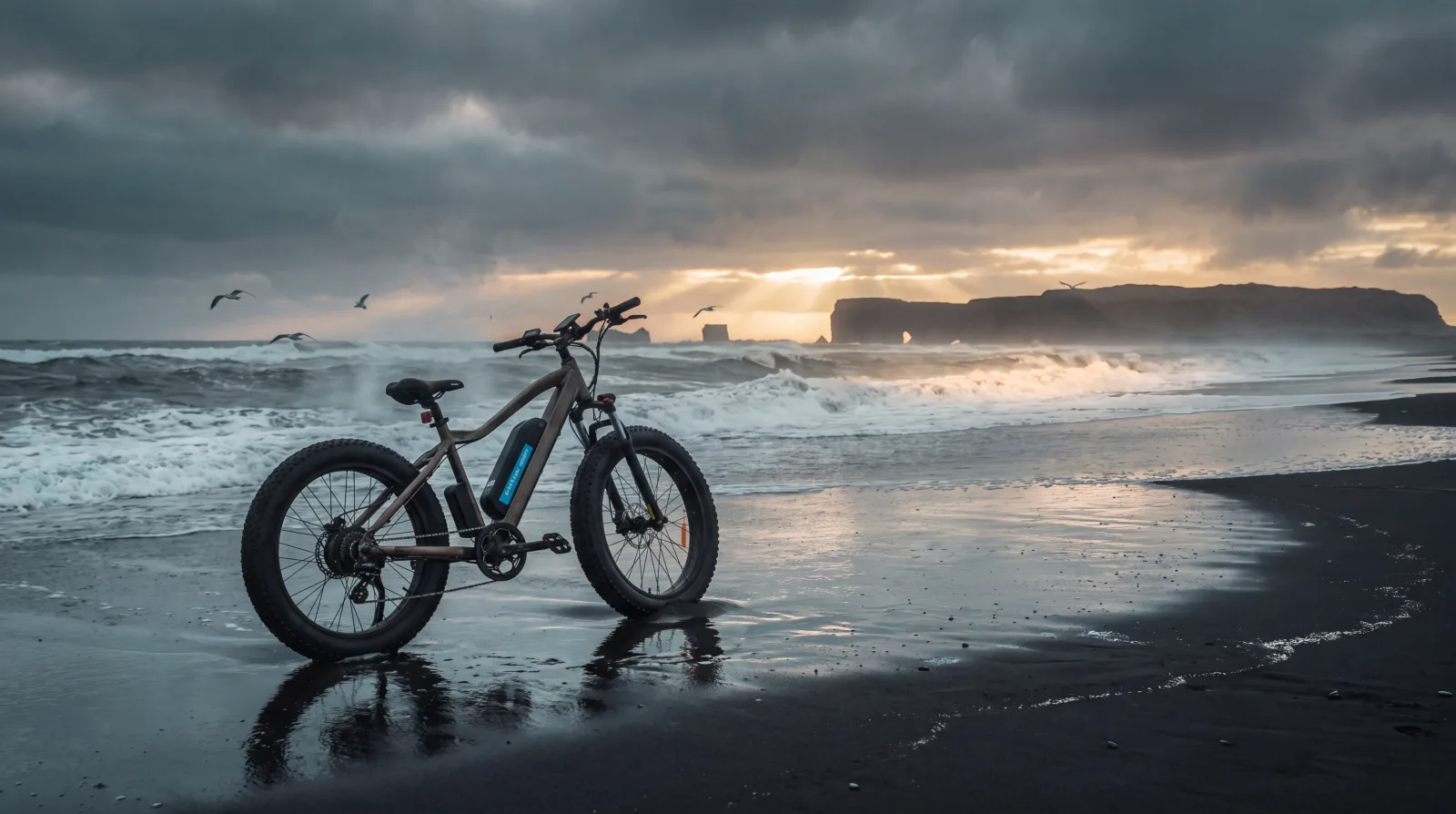
A fat tire electric bike rides on oversized tires, usually 4 inches or wider. The extra footprint floats over sand, snow, and loose trail where a narrow tire digs in. That grip costs weight and range. In our index, 16 fat-tire models carry a live Canadian price. Their median is $625 CAD, the lowest of any body style we track. Read that number as a signal, not a bargain: the fat-tire shelf is crowded with budget builds. The full catalog median is $2,373 CAD across 343 CAD-priced models. So a fat-tire sticker sits far below the shelf average, which means the specs deserve a hard look before you trust the price.
What a fat tire is for
A fat tire spreads the bike’s weight over a wider contact patch. Lower pressure and more rubber let the wheel float instead of sink. That matters on three surfaces: dry sand, packed snow, and soft or loose trail.
On pavement the same tire is a liability. It rolls slower, weighs more, and adds drag at every speed. A fat tire buys traction on bad ground and charges you for it everywhere else.
The look drives a lot of sales too. Many fat-tire builds are styled as mini-motos or beach cruisers, not as terrain tools. That styling is part of why the price floor sits so low.
What the fat-tire shelf costs
Fat-tire is the cheapest body style in our catalog by median price. Here is how the types compare, using the lowest live offer per model, in Canadian dollars.
| Type | Median price (CAD) | Models priced (n) |
|---|---|---|
| Cargo | $6,399 | 15 |
| Mountain | $5,199 | 29 |
| Trike | $3,599 | 5 |
| Road | $3,449 | 10 |
| Commuter | $2,799 | 139 |
| Folding | $1,800 | 11 |
| Scooter | $1,499 | 26 |
| Dirt/off-road | $999 | 92 |
| Fat-tire | $625 | 16 |
The $625 median is honest but thin. It rests on just 16 CAD-priced models, and the sample skews toward low-cost imports. A crowd of budget builds pulls the middle down. It does not mean a capable fat-tire machine is cheap.
For context, mountain e-bikes sit at a $5,199 median. Those are terrain bikes built to survive terrain. When a fat tire costs one-eighth of that, the saving usually comes out of the battery, the brakes, or the warranty. Compare listings side by side in the database before you read a low price as a win.
The trade-offs: weight and range
Fat tires cost range in two ways. They add rolling resistance, and they add mass. Both drain the battery faster than a slick tire on the same pack.
Range claims across the catalog already run far past physics. Of the 296 models that publish a range figure, the median claim is 126 km. That median runs about 198% above the battery-math midline. Our rule of thumb: watt-hours divided by 20 gives realistic assisted kilometres; divided by 15 gives the gentlest best case.
The catalog median battery is 749 Wh. Run the math: 749 divided by 20 is roughly 37 km of realistic assisted riding. A knobby fat tire on soft ground pushes real range below even that. We pulled apart the gap between claim and reality in The Range Lie.
So treat any fat-tire range sticker as a ceiling you will rarely reach. On the sand and snow these bikes are built for, resistance is highest and range is shortest.
What to check before you buy
Motor size is the first field to read. Across the 407 models that publish a rating, the median is 750 W, and 40% exceed 750 W. A quarter, 26%, carry more than 1000 W. Fat-tire and off-road builds cluster toward the high end of that range.
That power has a legal cost. Canada’s federal reference is 500 W and 32 km/h. The US low-speed e-bike definition is 750 W with throttle to 20 mph. A big-motor fat bike can sit outside the bicycle definition and be treated as a moped. Confirm your own region in the rulebook before you pay.
Price timing is the second field. Of 714 live offers in our index, 44% are genuine markdowns below the retailer’s own earlier price. The median genuine cut is 20%. Track which fat-tire deals are real in the market report, and see where they are for sale in the boards.
If you are still deciding on a body style at all, start with types of electric bikes, then work through the full electric bike buying guide.
Frequently asked questions
Are fat tire electric bikes worth it?
They are worth it if you ride sand, snow, or loose trail often. The wide contact patch floats over ground where a narrow tire sinks. If you ride mostly pavement, the weight and rolling drag work against you every trip. The fat-tire median in our catalog is $625 CAD across 16 priced models, the lowest of any type. That low floor reflects budget builds, not value, so match the tire to your terrain before you buy.
Why are fat tire electric bikes so cheap?
The median looks cheap because the sample skews to low-cost imports. Fat-tire is the lowest-priced body style we track: $625 CAD across 16 CAD-priced models, against a $2,373 catalog median. Many are styled as cruisers rather than built as terrain tools. A crowd of budget entrants pulls the median down. A capable fat-tire machine still costs real money; the low figure is a floor set by cheap builds, not the price of a good one.
Do fat tires reduce e-bike range?
Yes. Fat tires add rolling resistance and mass, so they draw more watt-hours per kilometre than a slick tire. Range claims already run high: the median published claim is 126 km across 296 models, about 198% above the battery-math midline. Using our rule, the catalog median 749 Wh pack supports roughly 37 km of realistic assisted riding. A fat tire on soft ground lands below that. Treat any range sticker as a ceiling, not an average.
Are fat tire e-bikes good for street riding?
They work on the street but are not efficient there. The wide, low-pressure tire rolls slower and drains the battery faster than a road or commuter tire. If your riding is mostly paved, a commuter build serves you better; the commuter median is $2,799 CAD across 139 models. Choose a fat tire when your regular route includes sand, snow, or trail, not because it looks rugged.
The bottom line
A fat tire electric bike is a terrain tool. Buy one if you regularly ride sand, snow, or loose trail, and accept the weight and shorter range as the price of grip. The $625 CAD median across our 16 priced models is a budget floor, not a value signal, so read the specs, not the sticker. Check the motor rating against your region’s power cap in the rulebook, confirm the range claim against the battery math, and verify any deal is a genuine markdown in the market report. If pavement is most of your riding, a different body style will serve you better.